-


Healthcare Communication Fatigue: When More Becomes Less
Read more: Healthcare Communication Fatigue: When More Becomes LessAre we making healthcare communication easier for patients, or adding to their burden? Think about how much communication a patient has to keep track of today. There are hospitals, physicians, pharmacies, insurance companies, specialists, and other…
-


Designing the Omnichannel Patient Journey
Read more: Designing the Omnichannel Patient JourneyThe goal isn’t to connect every channel. It’s to connect the experience. More channels create more possibilities. That doesn’t mean we need to use all of them. Healthcare communication has changed significantly over the last few…
-


Why Healthcare Messaging Is Broken
Read more: Why Healthcare Messaging Is BrokenMore investment. More channels. More technology. So why aren’t we communicating better? Healthcare organizations send an enormous volume of digital communications every day. With so much depending on these interactions, it is hardly surprising that organizations…
-
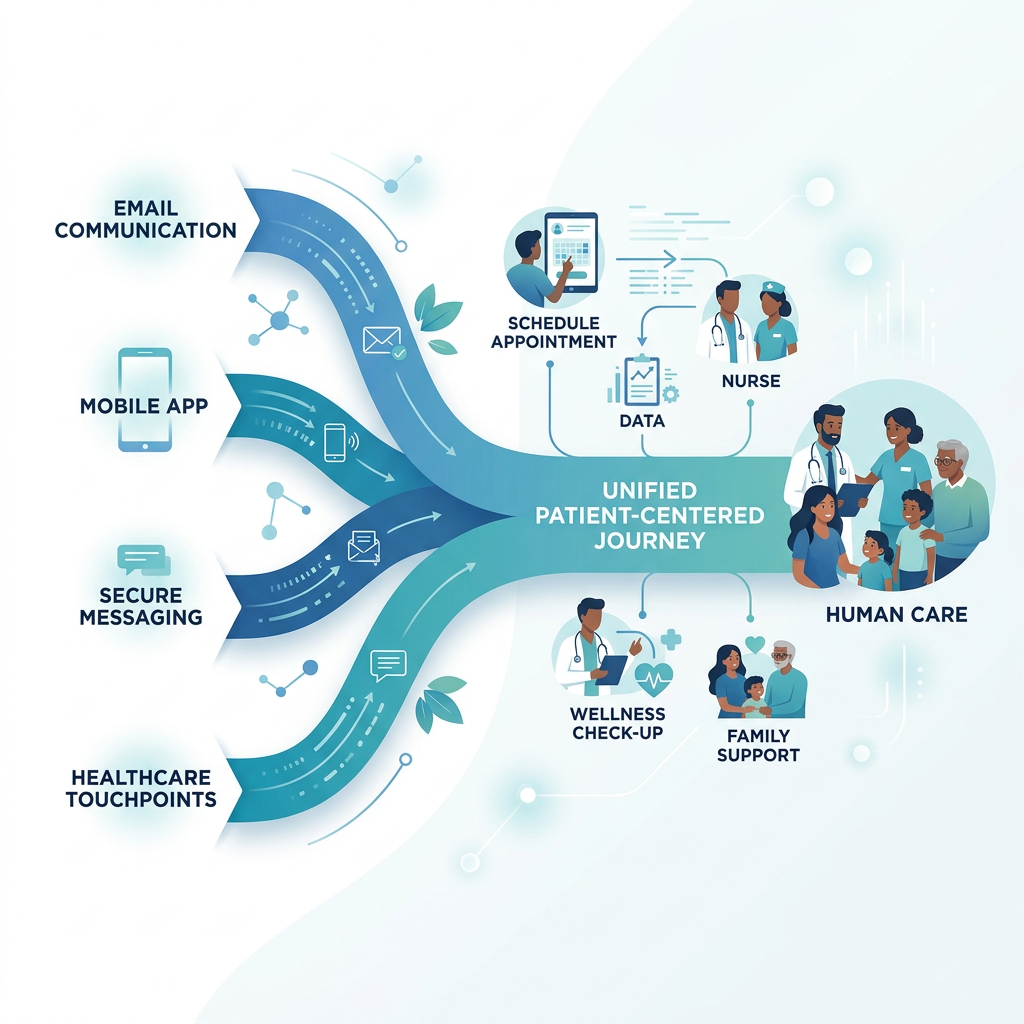
Patient Communication in the Digital Age
Read more: Patient Communication in the Digital AgeFrom Messages and Channels to Connected Healthcare Experiences Healthcare organizations today have more ways to communicate than ever before. Email. SMS. Push notifications. Patient portals. Apps. RCS. Automated calls. Each new channel gives us another opportunity…
EDITORIAL DIGEST
Never Miss a Beat
Sharp insights on healthcare communications, AI, and patient engagement — delivered straight to your inbox. No noise, no filler.
Join smart healthcare professionals staying ahead of the curve.
No spam. Unsubscribe anytime.
Browse by Category
Healthcare Messaging
Why messaging is broken, SMS vs Push vs Email, RCS and the future of patient communications.
AI in Healthcare Messaging
AI-powered communications, triage systems, and how machine learning is reshaping care delivery.
Patient Engagement
Omnichannel experiences, personalization at scale, and AI-driven engagement frameworks.
Industry Challenges
Notification fatigue, interoperability barriers, and the structural challenges in patient engagement.